The Invisible Infrastructure: Securing Your Physical Presence in the 2026 Urban Grid
We’ve talked extensively about digital sovereignty and building your online tribe. But let’s be blunt: Your physical presence in a city is often your weakest link. We feel that too many high-net-worth individuals are digital warriors and physical tourists. This is a fatal flaw in the 2026 operating environment.
1. Beyond the Perimeter: Understanding Physical Threat Vectors
When we talk about “physical security,” most people think of armed guards or alarm systems. We think that’s a superficial view. The real threats in today’s urban grids are far more subtle and systemic.
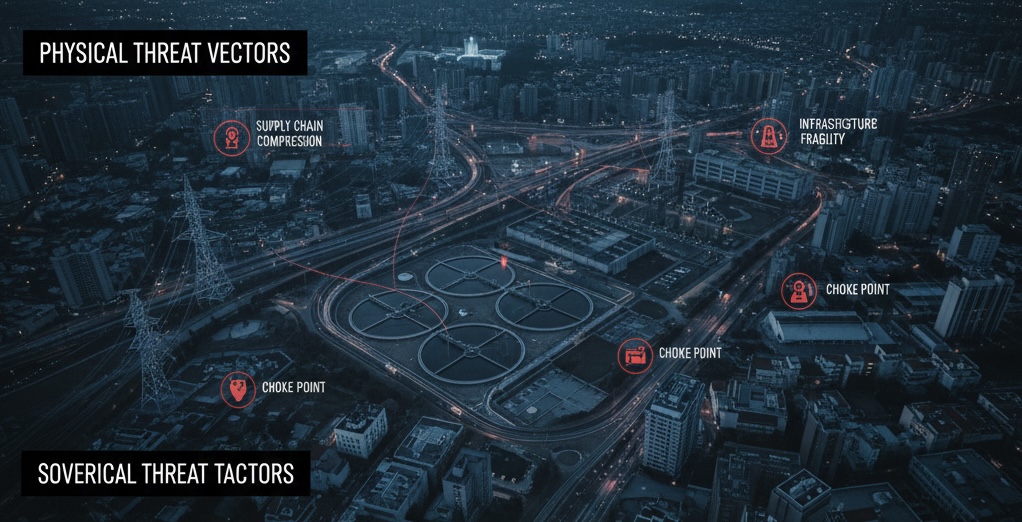
Our analysis identifies three primary, often overlooked, physical threat vectors:
-
Supply Chain Compression: Your reliance on external supply chains for food, water, power, and communications.
-
Infrastructural Fragility: The vulnerability of public utilities (electricity, internet, water) to localized disruption or systemic failure.
-
Socio-Political Volatility: The rapid onset of civil unrest, economic collapse, or policy shifts that can make a city node suddenly hostile.
We’ve observed that a smart operator can mitigate these digital risks with a good encryption stack. But physical threats? They require a different kind of architecture.
2. The “Safe Haven” Protocol: Not All Sanctuaries Are Equal
We believe the concept of a “safe haven” has been romanticized. It’s not just a remote cabin in the woods. In a truly volatile environment, a safe haven is a pre-qualified, redundant operational node—which can absolutely be within an urban or peri-urban environment.
Here’s our 2026 Safe Haven Evaluation Matrix:
| Metric | Core KPI | Tactical Weight | Mitigating Action |
| Connectivity Redundancy | Independent ISP routes, satellite link | High (35%) | Multiple failover options |
| Local Resource Autonomy | Water filtration, power generation, food storage | High (30%) | On-site reserves, local procurement |
| Perimeter Hardening | Discreet access control, surveillance integration | Medium (20%) | Layered, low-profile defenses |
| Egress & Ingress Routes | Multiple, pre-planned exit/entry points | Medium (15%) | Diversified transport options |
We’ve found that operators often focus on the “comfort” of a location, neglecting its “resilience.” In our view, true safety comes from self-sufficiency and redundant systems, not plush amenities.
3. Redundant Supply Chains: Your “Physical Digital Tools”
Just as you wouldn’t rely on a single VPN, you shouldn’t rely on a single grocery store. We feel this is a basic, yet critically under-addressed, aspect of urban tactics.
Consider your “physical digital tools”:
-
Power: Do you have independent power generation (solar, battery banks) that can run your critical communications and data infrastructure for at least 72 hours? What about 7 days?
-
Water: Beyond bottled water, do you have filtration systems for local sources? What’s your daily consumption rate for critical operations?
-
Comms: If the internet goes down, can you still coordinate with your tribe? Think satellite phones, encrypted mesh networks, or even HAM radio.
We believe that if your physical base can’t sustain itself for a minimum of a week without external inputs, it’s not a safe haven—it’s a liability. We’ve seen situations where sophisticated digital operations completely collapsed because a power outage took out the local Starbucks. Don’t be that operator.
4. The “Grey Man” Protocol: Blending In, Not Standing Out
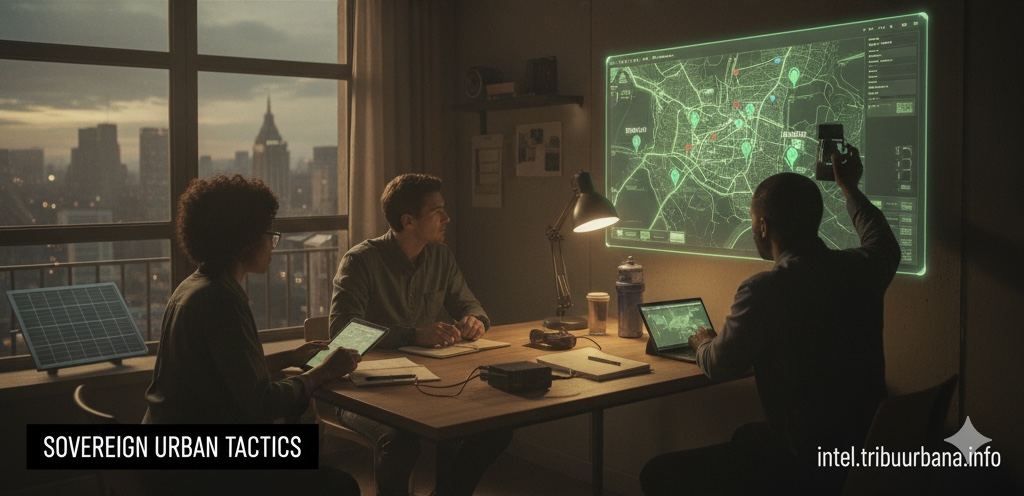
In an urban environment, drawing attention to your capabilities is a rookie mistake. We advocate for the “Grey Man” protocol. This isn’t about being invisible; it’s about being unremarkable.
-
Avoid Ostentation: Don’t signal wealth or preparedness. The less visible your high-value assets, the safer they are.
-
Cultivate Local Relations (Discreetly): Know your immediate neighbors, but don’t broadcast your operational capabilities. Your tribal network might be global, but your immediate physical security benefits from local, low-profile goodwill.
-
Observe & Adapt: The urban grid is constantly shifting. We believe continuous, low-key observation of local infrastructure, social mood, and potential choke points is more valuable than any static security plan.
5. Our Conclusion: Physical Sovereignty is the Final Frontier
We believe that in 2026, the ultimate expression of sovereignty isn’t just control over your digital identity or financial assets. It’s control over your physical existence in a world that is designed to make you dependent. Building this “invisible infrastructure” isn’t about paranoia; it’s about strategic foresight. It allows you to operate with absolute agency, regardless of what the headlines—or the streets—throw at you.