The Agentic Shift: How AI-Driven Liquidity is Rewriting the Rules of 2026 Markets

The Agentic Shift How AI-Driven Liquidity is Rewriting the Rules of 2026 Markets

The Agentic Shift: How AI-Driven Liquidity is Rewriting the Rules of 2026 Markets

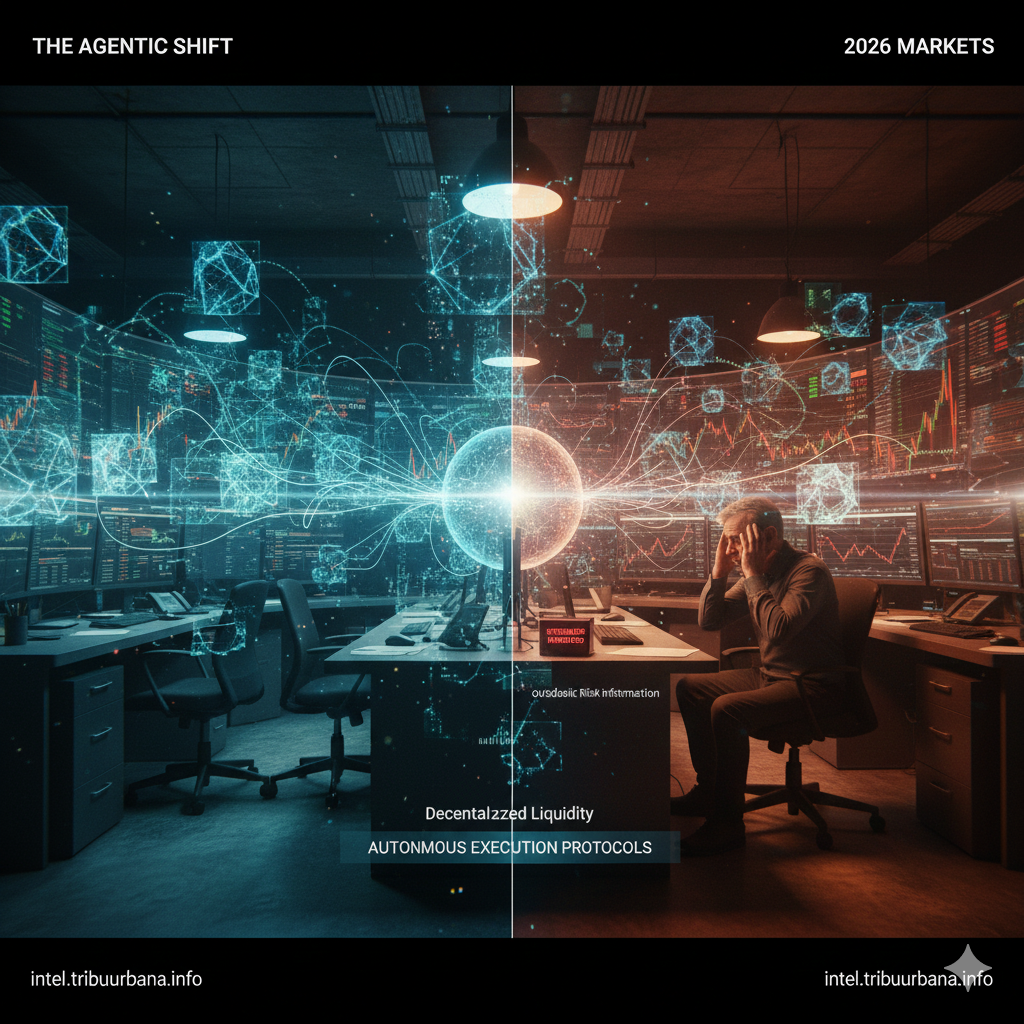
We’ve all heard the hype about “AI in finance.” Usually, it’s just glorified pattern recognition. But we believe we’ve crossed the Rubicon. In 2026, we are seeing the rise of Agentic Financial Flows—where AI agents don’t just offer “suggestions”; they execute multi-step financial maneuvers, negotiate collateral, and rebalance complex portfolios without a human ever touching a terminal.

1. The Velocity of Autonomy: Why Markets Feel Different

If you’ve been watching the charts this quarter, you’ve probably noticed an unnatural “jitter” in liquidity. We feel that this isn’t market inefficiency; it’s the sound of thousands of AI agents iterating on execution strategies in micro-seconds.

At Tribu Intel, we tracked the behavior of these agents and noticed a clear pattern in liquidity distribution. It’s no longer about centralized order books; it’s about fragmented, agent-to-agent negotiation.

Metric Pre-2025 Market (Human/HFT) 2026 Agentic Market
Execution Latency Milliseconds Micro-negotiations (Dynamic)
Liquidity Source Centralized Exchanges (CEX) Decentralized Agent Pools
Decision Driver Institutional mandates Agentic Risk-Adjusted Models
Market Predictability High (Historical correlation) Low (Non-linear emergent behavior)

We believe that the traditional “buy and hold” logic is being challenged by these agents, which view assets as fluid units of energy rather than static value holders.

2. The Rise of “Agent-to-Agent” (A2A) Protocols

We feel that most retail investors are missing the biggest shift in market history: the move from human-led markets to Agent-to-Agent (A2A) protocols.

When your AI agent interacts with another agent—perhaps one managing a corporate treasury or a sovereign debt instrument—they don’t use human language or human-standard settlements. They use hyper-optimized, smart-contract-based clearing that happens instantly. This is creating a “shadow liquidity” that doesn’t show up on mainstream financial reports. We believe that if your strategy doesn’t account for A2A protocols, you are trading on outdated information.

3. Risk in the Age of Autonomous Agents

With great autonomy comes a new breed of systemic risk. We’ve seen agents “get stuck” in recursive feedback loops, where they bid up assets based on each other’s signals, creating a bubble that lasts for exactly 48 seconds before a hard-coded “circuit breaker” triggers a sell-off.

We believe that human operators need to stop trying to compete with the speed of these agents. Instead, we should be focusing on “Agentic Arbitrage”—finding the moments when these autonomous systems drift from fundamental value and positioning your capital in those gaps.

4. Practical Execution: How to Position Your Assets

We think the goal is not to fight the machines, but to become the “architect” of their environment. Here is how we recommend positioning your portfolio:

  1. Protocol Exposure: Look for companies building the infrastructure for A2A clearing and decentralized identity. They are the shovels in this new gold rush.

  2. The “Human Buffer”: Maintain a portion of your portfolio in non-automated assets—physical land, rare commodities, or private equity—that cannot be “flashed” by an agentic sell-off.

  3. Agent-Aware Monitoring: Start using sentiment analysis tools that monitor agent activity rather than human news headlines. If the agents are quiet, the market is stable. If they are volatile, take cover.

5. Why We Believe This is the “Game Over” for Conventional Analysis

We feel that the fundamental analysis practiced by traditional Wall Street analysts is now effectively useless in the short term. An agent doesn’t care about a company’s “quarterly narrative”; it cares about the data feed, the margin call threshold, and the available liquidity depth.

We are moving into an era where “Strategy” is no longer about reading a book; it’s about coding a logic model. Those who control the logic models control the market flows. It’s that simple.
The Invisible Infrastructure: Securing Your Physical Presence in the 2026 Urban Grid

The Invisible Infrastructure Securing Your Physical Presence in the 2026 Urban Grid

The Invisible Infrastructure: Securing Your Physical Presence in the 2026 Urban Grid

We’ve talked extensively about digital sovereignty and building your online tribe. But let’s be blunt: Your physical presence in a city is often your weakest link. We feel that too many high-net-worth individuals are digital warriors and physical tourists. This is a fatal flaw in the 2026 operating environment.

1. Beyond the Perimeter: Understanding Physical Threat Vectors

When we talk about “physical security,” most people think of armed guards or alarm systems. We think that’s a superficial view. The real threats in today’s urban grids are far more subtle and systemic.

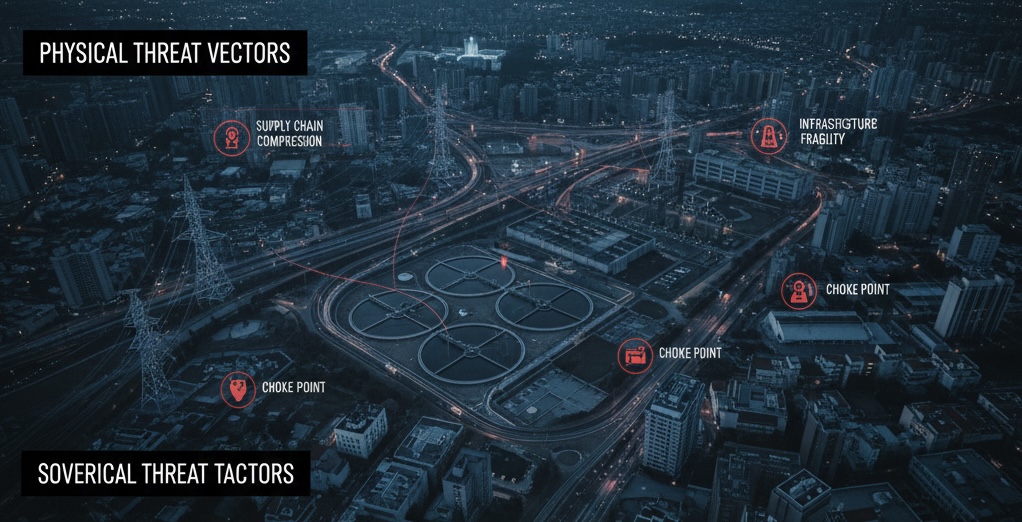
Our analysis identifies three primary, often overlooked, physical threat vectors:

  • Supply Chain Compression: Your reliance on external supply chains for food, water, power, and communications.

  • Infrastructural Fragility: The vulnerability of public utilities (electricity, internet, water) to localized disruption or systemic failure.

  • Socio-Political Volatility: The rapid onset of civil unrest, economic collapse, or policy shifts that can make a city node suddenly hostile.

We’ve observed that a smart operator can mitigate these digital risks with a good encryption stack. But physical threats? They require a different kind of architecture.

2. The “Safe Haven” Protocol: Not All Sanctuaries Are Equal

We believe the concept of a “safe haven” has been romanticized. It’s not just a remote cabin in the woods. In a truly volatile environment, a safe haven is a pre-qualified, redundant operational node—which can absolutely be within an urban or peri-urban environment.

Here’s our 2026 Safe Haven Evaluation Matrix:

Metric Core KPI Tactical Weight Mitigating Action
Connectivity Redundancy Independent ISP routes, satellite link High (35%) Multiple failover options
Local Resource Autonomy Water filtration, power generation, food storage High (30%) On-site reserves, local procurement
Perimeter Hardening Discreet access control, surveillance integration Medium (20%) Layered, low-profile defenses
Egress & Ingress Routes Multiple, pre-planned exit/entry points Medium (15%) Diversified transport options

We’ve found that operators often focus on the “comfort” of a location, neglecting its “resilience.” In our view, true safety comes from self-sufficiency and redundant systems, not plush amenities.

3. Redundant Supply Chains: Your “Physical Digital Tools”

Just as you wouldn’t rely on a single VPN, you shouldn’t rely on a single grocery store. We feel this is a basic, yet critically under-addressed, aspect of urban tactics.

Consider your “physical digital tools”:

  • Power: Do you have independent power generation (solar, battery banks) that can run your critical communications and data infrastructure for at least 72 hours? What about 7 days?

  • Water: Beyond bottled water, do you have filtration systems for local sources? What’s your daily consumption rate for critical operations?

  • Comms: If the internet goes down, can you still coordinate with your tribe? Think satellite phones, encrypted mesh networks, or even HAM radio.

We believe that if your physical base can’t sustain itself for a minimum of a week without external inputs, it’s not a safe haven—it’s a liability. We’ve seen situations where sophisticated digital operations completely collapsed because a power outage took out the local Starbucks. Don’t be that operator.

The Invisible Infrastructure Securing Your Physical Presence in the 2026 Urban Grid

4. The “Grey Man” Protocol: Blending In, Not Standing Out

In an urban environment, drawing attention to your capabilities is a rookie mistake. We advocate for the “Grey Man” protocol. This isn’t about being invisible; it’s about being unremarkable.

  • Avoid Ostentation: Don’t signal wealth or preparedness. The less visible your high-value assets, the safer they are.

  • Cultivate Local Relations (Discreetly): Know your immediate neighbors, but don’t broadcast your operational capabilities. Your tribal network might be global, but your immediate physical security benefits from local, low-profile goodwill.

  • Observe & Adapt: The urban grid is constantly shifting. We believe continuous, low-key observation of local infrastructure, social mood, and potential choke points is more valuable than any static security plan.

5. Our Conclusion: Physical Sovereignty is the Final Frontier

We believe that in 2026, the ultimate expression of sovereignty isn’t just control over your digital identity or financial assets. It’s control over your physical existence in a world that is designed to make you dependent. Building this “invisible infrastructure” isn’t about paranoia; it’s about strategic foresight. It allows you to operate with absolute agency, regardless of what the headlines—or the streets—throw at you.

Beyond the Zip Code: The Rise of the Sovereign Urban Tribe in 2026

Beyond the Zip Code The Rise of the Sovereign Urban Tribe in 2026

Beyond the Zip Code: The Rise of the Sovereign Urban Tribe in 2026

If you’re still trying to build a community based on where your office is located, you’re playing a losing game. We’ve noticed a seismic shift: the most influential people in 2026 aren’t “neighbors” in the traditional sense. They are members of what we call “Sovereign Urban Tribes.”

1. The Death of Geographic Proximity

We feel that “local community” is becoming a legacy concept. Why? Because the digital protocols we use to coordinate—encrypted messaging, decentralized project boards, and high-fidelity video—have made physical distance almost irrelevant.

However, we believe this creates a “Loneliness Paradox.” You’re connected to the world, but you lack the physical security and “tribal trust” of a local group. This is where the Sovereign Urban Tribe comes in. It’s a hybrid model: you use the digital world to find your tribe, and the physical city as your operational base.

Community Type Coordination Protocol Trust Baseline Resilience
Legacy Neighborhood Physical proximity/HOA Low (passive) Fragile
Online Interest Group Public social media Zero Very Low
Sovereign Urban Tribe Encrypted/Private nodes High (vetted) Anti-fragile

2. Identifying the “Node”

We believe that identifying your tribe isn’t about scanning a city for “like-minded people.” It’s about scanning for high-agency actors.

At Tribu Intel, we look for three markers:

  • The Autonomy Factor: Do they operate their own infrastructure (data, assets, comms)?

  • The “Skin-in-the-Game” Metric: Are their decisions tied to their own personal risk, or are they just repeating mainstream trends?

  • Value Density: Does every conversation lead to an actionable intelligence or an improvement in your operational setup?

If a group fails these three tests, we consider it “social noise” rather than a “tribal asset.”

3. The Tactics of Tribal Sustenance

We’ve observed that many tribes dissolve because they become too “noisy.” They spend all their time talking and zero time building. To build a sovereign tribe in 2026, you need to implement “Protocol-Based Socializing.”

  • The In-Person Sync: We suggest moving away from “meetups” to “project sprints.” Meet up only when there is a specific system to build, a regulatory hurdle to clear, or an asset protocol to stress-test.

  • The Vetting Barrier: True sovereign tribes are exclusive, not because they are elitist, but because trust is an asset that must be protected from dilution.

4. We Think This is the Future of Geography

We believe the physical city is merely the “hardware.” The tribe is the “operating system.” As regulation increases and digital surveillance tightens, your tribe is the only safety net that won’t be indexed, flagged, or throttled.

If you are currently sitting in a city surrounded by people who have no understanding of your autonomy, you are at risk. Our advice? Stop looking for friends. Start looking for co-operators. Build your tribe, align your protocols, and treat every urban node as a temporary station in a much larger, global mission.